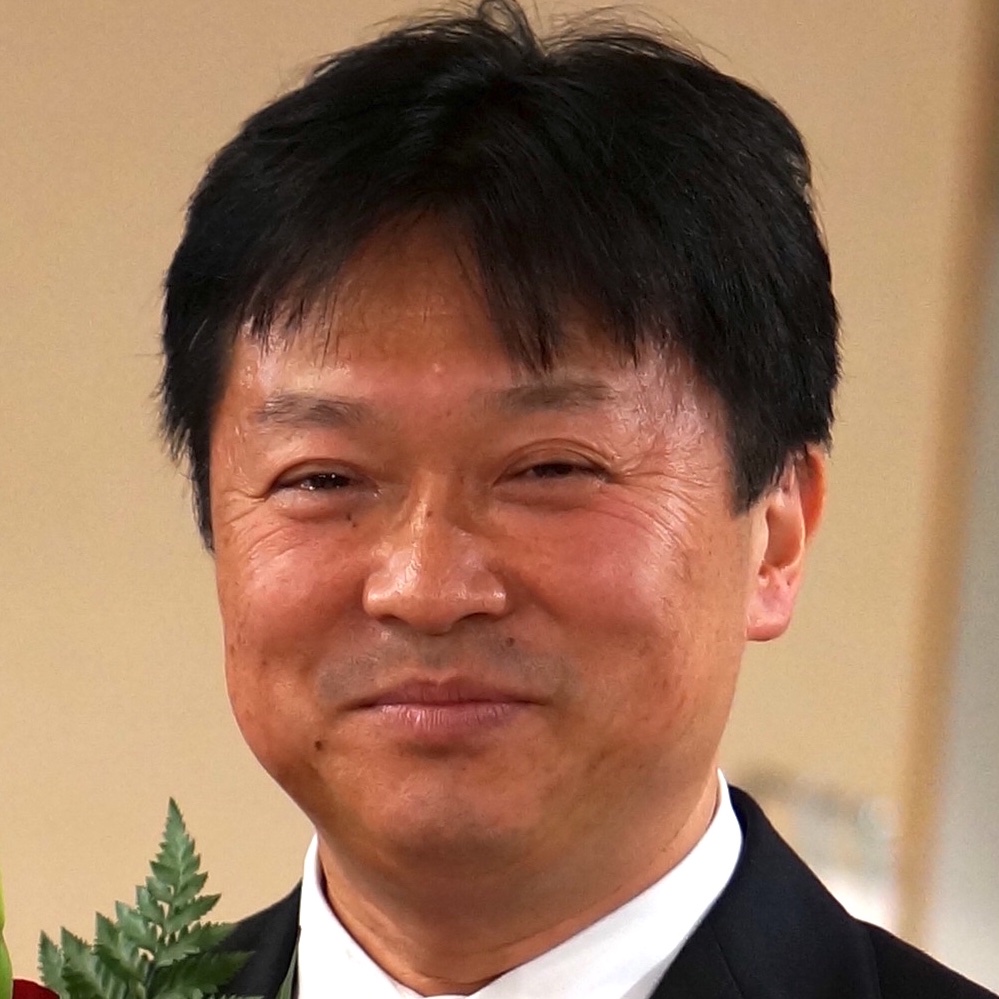
Profile

KUZUYAMA Tomohisa

KUZUYAMA Tomohisa

Department Department of Biotechnology
Laboratory Synthetic Biology Laboratory
Title Professor
researchmap Link

Research introduction for the general public

Nature’s “Gifts” That Benefit Human Life

In 2015, the Nobel Prize in Physiology or Medicine was awarded to Dr. Satoshi Ōmura for his discovery of microorganisms that produce drugs effective against parasitic infections. Dr. Ōmura devoted much of his career to studying actinomycetes, a group of microorganisms renowned for producing a wide variety of bioactive compounds, including antibiotics and other drug precursors. Although invisible to the naked eye, these microorganisms thrive all around us, for example, they are abundant in the leaf litter and humus on forest floors. Japan may lack abundant energy resources such as crude oil, yet its long north–south geography and distinct four seasons have nurtured an exceptionally rich and diverse reservoir of microorganisms. By exploring these remarkable “gifts from nature,” such as antibiotics, we may uncover novel chemical substances that contribute to human well-being. In addition, learning how microorganisms create these substances has great scientific value and may even lead to the discovery of brand-new chemical reactions. Harnessing these reactions could ultimately enable us to design and freely synthesize valuable chemical compounds with unprecedented efficiency.

Educational approach

Discovering and Utilizing "Treasures" from Nature

All around us, countless natural products with unknown benefits to people are still waiting to be discovered. Genetic resources derived from ecosystems (metagenomes) also harbor many genes responsible for producing bioactive molecules. At the Synthetic Biology Laboratory, we aim to analyze diverse metabolic pathways and, based on this knowledge, apply synthetic biology to develop innovative strategies for producing useful compounds. In parallel, we seek to uncover new relationships between the versatile functions of organisms and their ecosystems, thereby establishing novel principles in biology. By discovering new bioactive compounds and functional molecules, we can launch interdisciplinary studies centered on their mechanisms of action, organic synthesis, and biosynthetic pathways. These studies also foster collaborative research that integrates bioinformatics, structural biology, and computational chemistry. Through such approaches, we aim to build a “research network centered on bioactive functional molecules,” keeping our work at the forefront of science. At the same time, we aspire to foster new bioindustries by applying insights into bioactive compounds and their biosynthetic genes. Our laboratory is run with the belief that individuals should collaborate while recognizing their unique roles, enabling everyone to realize their potential, grow together, and generate new knowledge.

Vision for industry-academia collaboration

Making Better Use of Natural Resources

Drug discovery from natural products is an area in which Japan has long excelled a distinguished legacy of leading the world in the discovery and development of new medicines. Success stories such as the development of acrylamide and biodegradable polymers—achieved by exploring microorganisms and biocatalysts in nature—demonstrate Japan’s strength in bioproduction systems that harness biological functions. Although Japan is poor in fossil resources, its geography and climate have fostered extraordinary biodiversity, providing a vast reservoir of genetic information. It would be a missed opportunity not to take full advantage of the structural and catalytic “big data” hidden in this diversity. In Japan, actinomycetes and Aspergillus oryzae (the so-called “national fungus”) have long been developed as heterologous production hosts. Biosynthetic methods using Aspergillus oryzae are recognized worldwide for their remarkable performance and versatility. With further refinement by companies engaged in industrial fermentation, these methods are expected to achieve practical yields at the industrial level. For these reasons, biosynthetic science is a field where Japan—having cultivated an original tradition in natural product chemistry—should continue to play a leading role. It is also an essential area of research for building a sustainable bioeconomy society for the future.

Research Overview Poster (PDF)

Featured Articles

New Pathway Discovered for Selective Ribosome Degradation in Starving Yeast—Revealing the Mechanism of Starvation Adaptation and the Multifunctionality of Degradative Enzymes
Elucidation of a Biosynthetic Strategy for Natural Products Using Elaborate Functional Group Transformations

Keywords

Keywords1  :  Microorganisms, Natural Products, Biosynthesis, Bioactive Substances, Biocatalysts, Enzymes, Reaction Mechanisms, Genetic Information, Bioinformatics
Keywords2  :  Global Warming, Decarbonization, Health Issues, Depletion of Natural Resources