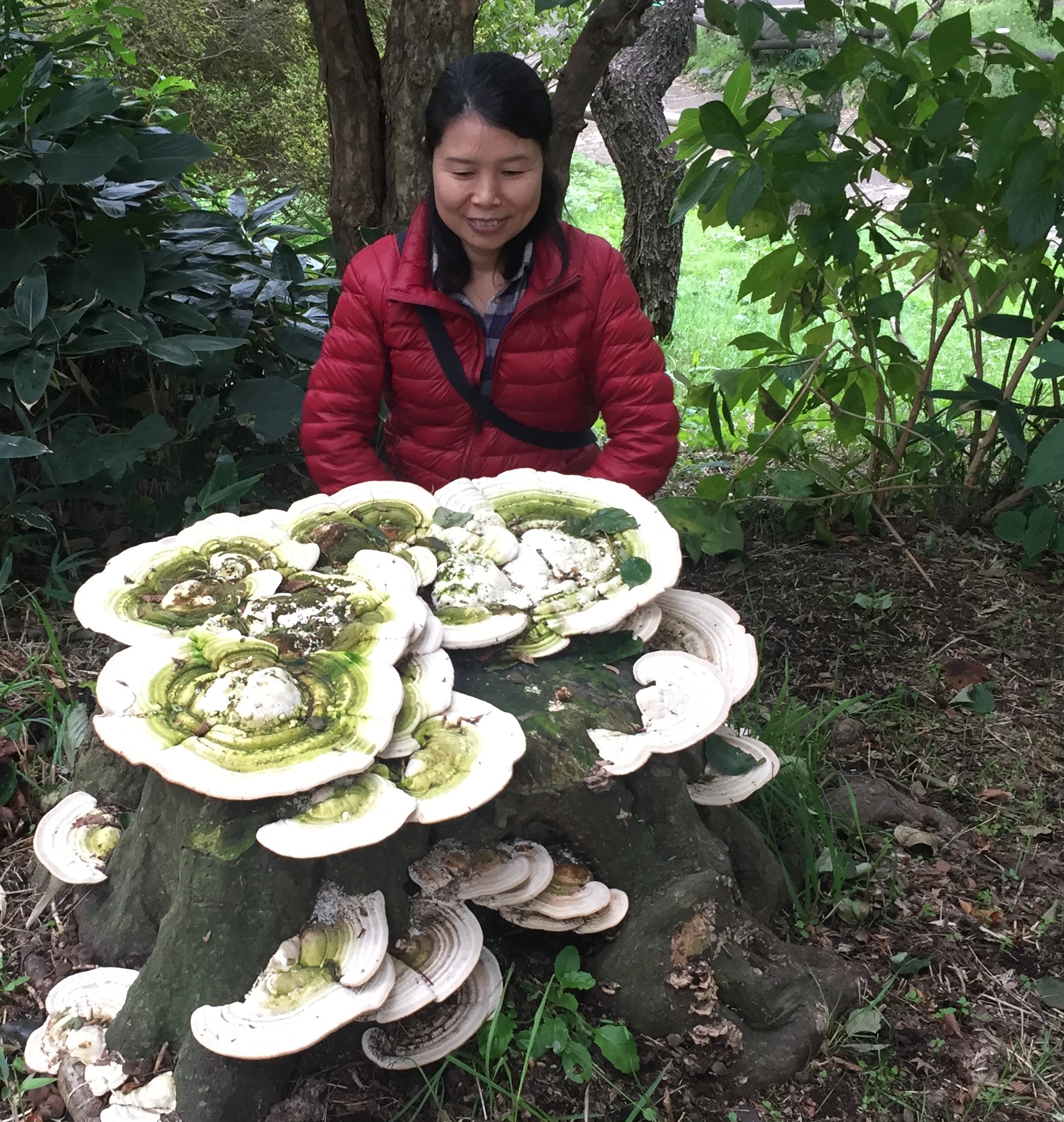
The fascinating relationship between living trees and mushrooms: The importance and applications of ectomycorrhizal fungi
In forest ecosystems, diverse organisms coexist and live in symbiotic relationships.
Why are trees able to grow to such great sizes?
And why do so many mushrooms emerge from forest floors?
In fact, many of the mushrooms we see in forests are partners of trees, forming symbiotic relationships through tree roots, where their hyphae absorb water and nutrients from the soil and supply them to their host trees.
Trees cannot grow well, and even survival becomes difficult, without forming symbiosis with these mushrooms collectively known as ectomycorrhizal fungi.
On the other hand, many highly prized edible mushrooms such as matsutake and truffles are ectomycorrhizal fungi.
These fungi cannot grow or produce mushrooms without receiving photosynthetic products from living trees.
Because they depend on living trees, most ectomycorrhizal mushrooms have not been successfully cultivated artificially.
In our laboratory, we have been investigating whether ectomycorrhizal fungi can be used to restore vegetation in degraded environments such as mining sites, arid areas, and saline soils, clarifying the mechanisms of their heavy metal and salt tolerance.
Our studies have shown that pine seedlings growing on copper tailings at mining sites exhibit improved survival and growth when symbiotic with ectomycorrhizal fungi, and that inoculating them can be an effective approach for forest restoration.
Currently, we are advancing genomic studies to understand how ectomycorrhizal fungi adapt to stressful environments.
Using new technologies such as genome-wide association analysis and genome editing, we aim to identify the genes involved in mycorrhiza formation and mushroom development. Ultimately, we hope to apply this knowledge to develop cultivation and yield enhancement techniques for edible ectomycorrhizal mushrooms within satoyama landscapes.
Educational approach
Challenging research with enthusiasm
Ectomycorrhizal fungi form mycorrhizae in association with trees, playing a crucial role in nutrient cycling and the establishment and maintenance of forest ecosystems.
At the same time, they include many valuable edible mushrooms such as matsutake and truffles, making them economically important as well.
Despite their diverse importance, the molecular and physiological mechanisms underlying symbiotic formation with trees remain largely unknown.
Thus, our laboratory strives to elucidate these mechanisms, particularly those related to stress adaptation, mycorrhiza formation, and mushroom development. Through this work, we aim to contribute both to vegetation restoration in degraded soils and to the sustainable cultivation of edible ectomycorrhizal mushrooms.
We hold weekly literature review sessions and actively encourage students to present their research at seminars and conferences.
We also engage in frequent discussions to explore problem-solving methods together.
Through this, we strive to guide students to think independently, learn proactively, and engage actively in research.
Goals for human resource development
Researchers explore the unknown, guided by curiosity and imagination.
In most cases, this ends in failure, leading to a modest lifestyle.
Without a genuine passion for research, one cannot continue in science.
Our goal in training human resources is to foster individuals who find joy and enthusiasm in research, and who continue to challenge themselves with curiosity and determination.
Vision for industry-academia collaboration
Afforestation techniques using edible ectomycorrhizal fungi and the cultivation and increased production of edible ectomycorrhizal mushrooms
CO2 is the most abundant greenhouse gas and a major driver of global warming.
Ectomycorrhizal fungi promote tree growth, and it is estimated that about 20–50% of photosynthetic products from trees are allocated to their underground mycelia.
Since many ectomycorrhizal fungi are also edible, their application in afforestation is expected to enhance carbon sequestration.
Specifically, our laboratory is working on developing afforestation techniques using edible ectomycorrhizal fungi, as well as methods for their artificial cultivation and increased production.
Through these efforts, our laboratory are expected to contribute to global environmental conservation and solutions to food issues, while deepening our understanding of the fundamental biology of tree–fungus symbiosis.