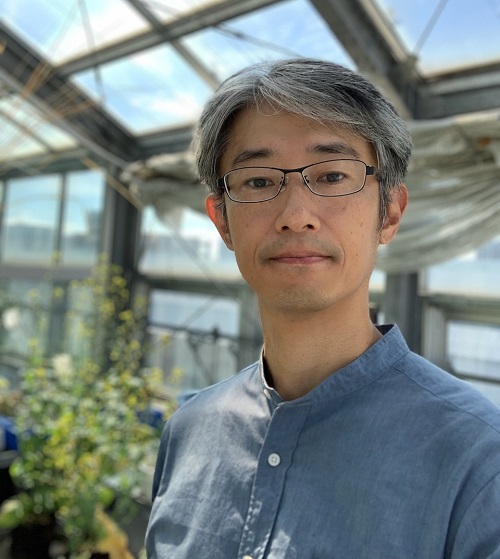
In nature, with the arrival of spring, we can observe insects visiting the flowers of plants. “Flowers” serve as an essential hub in ecosystems where plants, insects, and microorganisms converge. At the same time, flowers are deeply embedded in our society—through flower fields, fragrances, and food production—and play important roles in human life. I conduct research to explore biomolecules and bioactive substances within flowers, aiming to clarify how pollen, pistils, and symbiotic microorganisms interact with each other. Specifically, I seek to elucidate the mechanisms by which plant pollen and pistils distinguish between self and non-self, or between species, as well as the dynamics between flowers and their symbiotic microorganisms. By exploring this “secret garden,” I aim to uncover the fundamental biological principles that shape complex ecosystems.
Educational approach
Exploring Molecules That Drive Ecosystems: Fostering Human Resources with a Multidimensional Perspective
Our goal is to elucidate the biological phenomena that serve as key drivers of ecosystems. Ecosystems are highly complex, involving interactions among many organisms.If we continue to treat them as black boxes, science cannot progress, or can we open the path toward a truly sustainable global environment. In our laboratory, we seek to identify unknown substances, such as macromolecular proteins and small organic compounds, that serve as keys to vital biological phenomena. The mechanisms underlying biological phenomena are often deceptively simple, and once they are clearly deciphered, they reveal molecular models that seem almost effortless. In our laboratory, while elucidating such mechanisms at the microscopic level of life phenomena, we also strive to cultivate individuals who can simultaneously consider the broader question: What significance do these mechanisms hold for ecosystems? Through research into the fundamental principles of life, we aim to nurture leaders who can maintain meticulous planning while also envisioning a global perspective, and to send them forth into both society and academia.
Vision for industry-academia collaboration
Exploring and Pursuing Molecules for More Flexible Agriculture and Bio-Life Control
We have so far discovered a wide range of bioactive substances and biomolecules, mainly from plants, and continue to search for compounds with new potential. For example, biomolecules and compounds that regulate reproductive phenomena such as self-incompatibility and prezygotic interspecific barriers in plants are expected to be applied in agricultural breeding practices. Among these molecules, some possess regulatory activities beyond existing concepts, which we believe can lead to the development of novel biotechnology-related techniques. Furthermore, while exploring key substances underlying biological phenomena, we are also pursuing research aimed at achieving more versatile control of biological activity through approaches such as chemical biology.