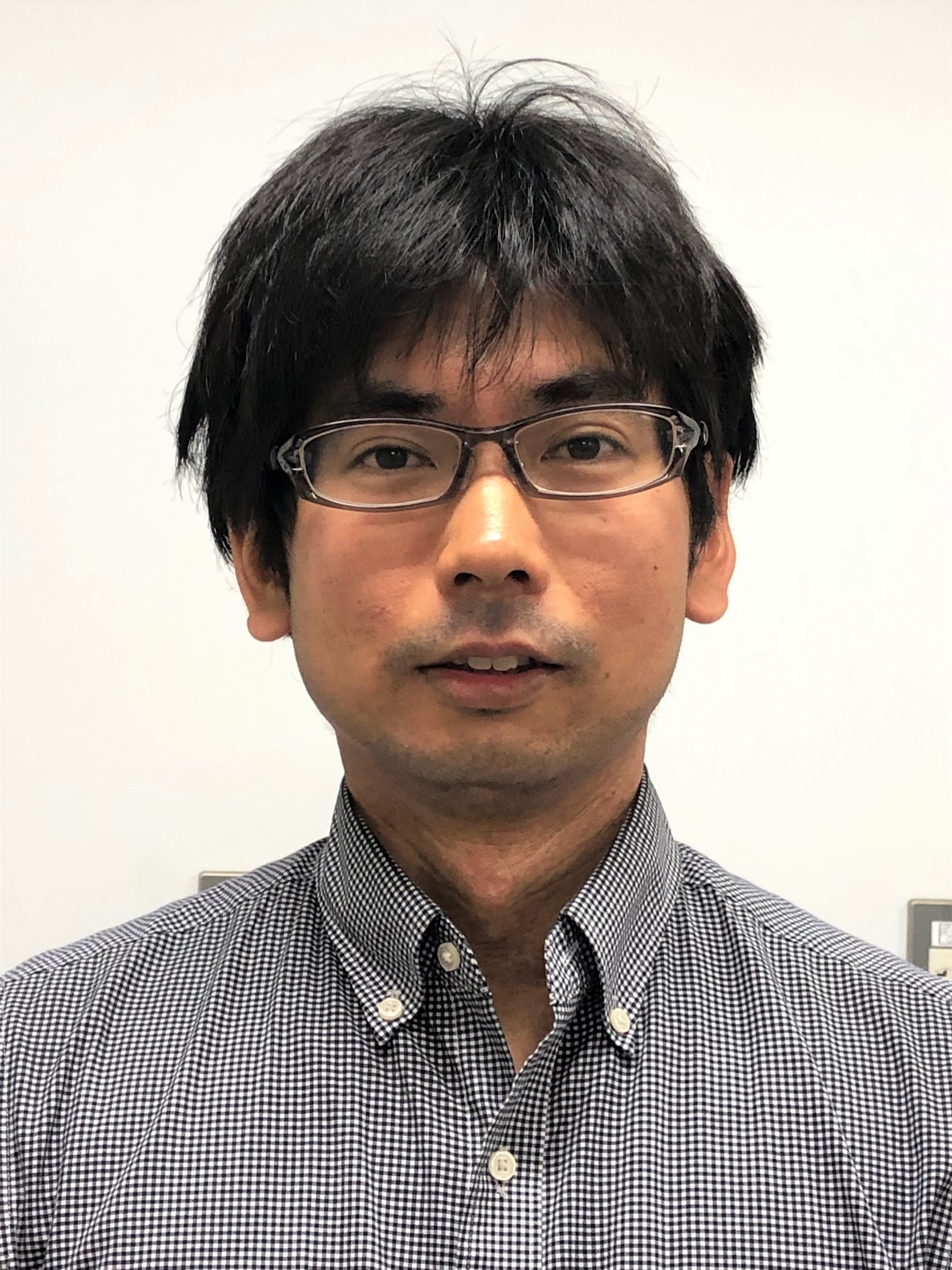
Profile

SUZUKI Michio

SUZUKI Michio

Department Department of Applied Biological Chemistry
Laboratory Laboratory of Analytical Chemistry
Title Professor
researchmap Link

Research introduction for the general public

Biomineralization Research for Pioneering the Future

Shellfish, corals, and sea urchins are known for having hard tissues formed by living organisms. These hard tissues are mainly composed of calcium carbonate, but they are not simply formed by inorganic chemical reactions. Instead, small amounts of organic substances derived from living organisms act to efficiently deposit high-strength calcium carbonate. This phenomenon is called biomineralization. I am conducting research to identify the nature of the organic substances contained in small amounts within biominerals, and I have revealed the existence of entirely novel proteins and chemical reactions. Pearls, which are gemstones, are also a type of biomineral mainly composed of calcium carbonate. I reported many important novel proteins contained in pearls and other biominerals, and I named those proteins myself. By utilizing the functions of such unique proteins, it is possible to apply this knowledge to technologies for industrially synthesizing various forms of calcium carbonate. Moreover, calcium carbonate is produced when carbon dioxide dissolved in water combines with calcium ions. Since biomineralization enables this reaction to proceed efficiently, it can also be applied to research that fixes atmospheric carbon dioxide as calcium carbonate. By pursuing the principles of biomineralization, I aim to achieve results that can contribute to society.

Educational approach

Inorganic Chemistry in the Faculty of Agriculture

I provide the only inorganic chemistry-related lectures in the Faculty of Agriculture. The lectures I am in charge of are “Fundamentals of Analytical Chemistry,” “Analytical Chemistry,” and “Bioinorganic Chemistry.” In addition, I also lecture in omnibus-style food-related courses, where I talk about minerals in food and toxic metals. To study the broad field of life sciences, it is necessary to have a wide range of knowledge and education, rather than being confined to a narrow specialty. In a faculty where many lectures are related to “organic molecules,” I would like as many students as possible to expand their perspective to include the realm of “inorganic elements.” Students in my laboratory pursue research themes such as biomineralization including pearls, food-related minerals, toxic metals, and metallic nanoparticles. We actively conduct joint research with other universities and companies. Although each student has one research theme, research is conducted interactively. I aim to cultivate human resources who can think independently and logically, and as a policy, I place importance on students’ autonomy. After completing their studies, many students find employment in research positions at national institutes, chemical manufacturers, or food manufacturers.

Vision for industry-academia collaboration

Decarbonization through Biomineralization

The concentration of carbon dioxide in the atmosphere is rising, and urgent measures against global warming are required. Many initiatives aim to fix carbon dioxide into organic matter. However, converting carbon dioxide into organic matter requires energy, which always entails a trade-off between costs and the carbon dioxide balance. On the other hand, the reaction from carbon dioxide to calcium carbonate proceeds spontaneously, without the need for external energy input. Yet, in the ocean, the presence of various coexisting ions makes this reaction kinetically unfavorable, so calcium carbonate does not readily precipitate. Biological biomineralization, however, allows calcium carbonate to precipitate efficiently in the ocean. By elucidating the molecular mechanisms of such biomineralization, it is possible to apply them to technologies for efficiently producing calcium carbonate. We are currently promoting this initiative through joint research with various companies, but we hope to advance decarbonization research via biomineralization on an even larger project scale.

Research Overview Poster (PDF)

Featured Articles

Discovery of a novel protein “twip1” that controls crystal defects (twinning) in calcium carbonate — elucidating the molecular mechanism of high-density twin structure formation —
Corals contribute to CO2 fixation! – Elucidation of the mechanism of pH elevation during skeleton formation –
Unraveling the enigmatic ecology of primitive archaea hidden in dark ecosystems — the key to proliferation lies inside rocks at deep-sea hydrothermal vents —
Static growth inhibition of Gram-negative bacteria by blocking iron uptake — elucidation of the ligand-binding mode of citrate–iron-binding protein FecB and identification of inhibitors —
Discovery of structures that create chemical factories in plants — from the analysis of cucumber bloomless mutants —
Genomic and transcriptomic analysis of African swine fever virus — exploration of new vaccines and therapies: comparative study of highly virulent and attenuated strains —

Keywords

Keywords1  :  biomineralization, bioinorganic chemistry, analytical chemistry, life metals, Akoya oyster, pearl, coral, sea urchin, otolith, tooth, bone, dental calculus, metal nanoparticles, quantum dots, calcium carbonate, aragonite, calcite, calcium phosphate, apatite, whitlockite, coccolithophore, chitin, chitinase, chitin synthase, calcium, gold, magnesium, cadmium, lead, phosphate, pyrite, iron sulfide, iron, zinc
Keywords2  :  climate change, decarbonization, global warming, ocean acidification, CCS, CCUS, DAC