

Department of Applied Biological Chemistry
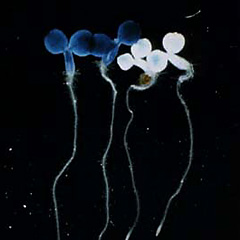
Studies and education on wide research fields around biological chemistry are carried out in the Department of Applied Biological Chemistry. In addition to the basic research methodology of biological chemistry, which consists of biochemistry, organic chemistry and cellular biochemistry, new research methodology and techniques, such as genetic engineering, protein engineering or cellular engineering, are actively being introduced by this department.
By applying them to the research fields of plants and animals for food production, cellular functions of food-producing organisms and food immunology, discovering new bioactive compounds and the maintenance of the environment for the coexistence of human beings and living organisms, this department is seeking to further advance the research methodology of biological chemistry and the development of a new era of coexistence between human beings and all living things. This department’s efforts can function as a world network in developing techniques in bioproduction and biological chemistry.
Laboratories
Department of Applied Biological Chemistry
| Biofunctional Chemistry | |
|---|---|
| Plant Molecular Physiology | Molecular and cellular biology of plant responses and tolerance to environmental stresses |
| Biological Function | Molecular-cell biology, neurology of taste signaling and biochemistry of food proteins |
| Agricultural Chemistry | |
| Plant Nutrition and Fertilizers | Plant nutrient transport, metabolism, responses to nutritional conditions and nutrient stress-tolerance |
| Biological Chemistry | Chemistry, molecular biology, and neuroscience of chemosensory signals and receptors in mammal, insect, plant, and microorganism |
| Organic Chemistry | Organic synthesis of bioactive natural products and their derivatives for the elucidation of bioactive functions or the practical use Development of new reactions for efficient synthesis of optically active substances |
| Bioorganic Chemistry | Chemistry, biochemistry and molecular biology of bioactive compounds such as invertebrate peptide hormones, microbial secondary metabolites and compounds regulating biomineralization |
| Soil Science | Soil microbiology for sustainable agriculture and environmental conservation |
| Chemical Biology | Chemistry, physiology, and molecular biology for plant growth regulation |
| Food Science | |
| Nutrition Chemistry | Nutrient regulation of gene expression Differentiation of mammalian cells |
| Food Chemistry | Chemical, biochemical and molecular biological studies on intestinal function-modulating food substances |
| Food Biochemistry | Molecular and cellular biological studies on lifestyle-related diseases Search for food factors that prevent lifestyle-related diseases |
| Analytical Chemistry | Bioinorganic chemistry of biological and environmental systems |
| Food Biotechnology and Structural Biology | Biotechnology, structural biology and physicochemistry of proteins, enzymes and foods |
| ILSI Japan-Endowed Chair | |
| Food Functionality Science | Functional genomics to investigate food-induced physiological responses |
| Nissin Food Products-Endowed Chair | |
| Taste Science | Investigation of the molecular logic of sensory events for application to food quality design |
| Nippn-Endowed Chair | |
| Food-Related Health Science | Nutrients and food constituents |
| Social Cooperation Programs | |
| Nutri-Life Science | Investigating molecular and cellular basis of skeletal muscle integrity to extend a healthy life expectancy |